
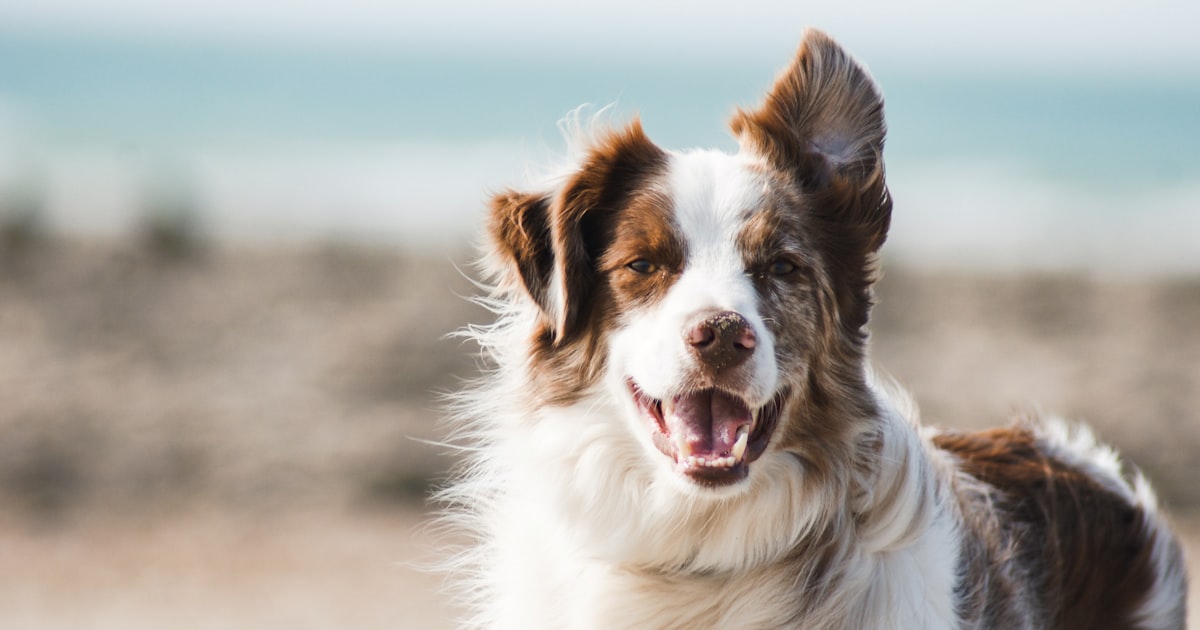
Your dog follows you everywhere because you are the center of their social world. Dogs are pack animals hardwired for companionship, and after thousands of years of domestication, they've evolved to see their human as their primary source of safety, food, and emotional connection. That shadow trailing you from room to room isn't a behavioral flaw — it's one of the deepest expressions of the human-canine bond.
The term "velcro dog" gets thrown around a lot in pet circles, usually with a mix of affection and mild exasperation. But the behavior is genuinely rooted in evolutionary biology, neurochemistry, and social learning. Understanding why your dog does this can help you appreciate the bond you share — and recognize when it might signal something that needs attention.
The Evolutionary Bond: From Wolves to Your Living Room
The story of velcro dogs begins roughly 15,000 to 40,000 years ago, when wolves first started associating with human camps. The wolves that were less fearful of humans — the ones willing to stick close — gained access to food scraps and warmth. Over generations, natural selection favored the wolves that actively sought human proximity, and those wolves eventually became the domestic dogs we know today.
This isn't just speculation. A 2017 study in Science Advances identified specific genetic changes on chromosome 6 in dogs that are associated with hypersociability — a strong, almost compulsive desire to seek human contact. Wolves don't carry these variants. In other words, the tendency to follow you around is literally written into your dog's DNA.
Dogs didn't just learn to tolerate humans. They evolved a genetic predisposition to actively seek us out. The "velcro" behavior you see in your living room has its roots in tens of thousands of years of co-evolution.
The Oxytocin Loop: Why Eye Contact Makes It Worse (In a Good Way)
In 2015, researcher Miho Nagasawa and colleagues at Azabu University in Japan published a landmark study in Science that changed how we understand the dog-human relationship. They found that when dogs and their owners gaze into each other's eyes, both experience a spike in oxytocin — the same hormone that bonds mothers to their newborns.
This creates a self-reinforcing feedback loop. Your dog looks at you, you both get a hit of oxytocin, which feels good, so your dog seeks you out more, which leads to more eye contact, which triggers more oxytocin. Wolves raised by humans did not show this effect, which suggests it's a uniquely domesticated trait. Your dog isn't just following you because they want food — they're following you because being near you is biochemically rewarding.
7 Reasons Your Dog Follows You Everywhere
1. Social Bonding and Pack Instinct
Dogs are social creatures that naturally form close attachments. In a wild pack, members stay close together for protection and cooperation. Your household is your dog's pack, and you're the leader. Following you is their way of maintaining social cohesion — the same instinct that kept their ancestors alive on hunts and during migrations.
2. Food Association and Resource Guarding (You)
Let's be honest: you're the one who fills the food bowl. Dogs are brilliant at learning cause-and-effect relationships, and if being near you consistently leads to meals, treats, and snacks dropped on the kitchen floor, they'll keep following the food source. This is basic operant conditioning — the behavior (following you) leads to a reward (food), so the behavior gets repeated.
3. Separation Anxiety
Not all following behavior is healthy. Dogs with separation anxiety follow their owners obsessively because being apart causes genuine distress. These dogs may also pant, drool, destroy furniture, or vocalize when you leave. If your dog becomes frantic rather than simply attentive when you move to another room, anxiety could be the driver. The ASPCA estimates that separation anxiety affects roughly 20-40% of dogs seen by behavioral specialists.
4. Breed Disposition
Some breeds were specifically developed to work in close partnership with humans, and that heritage shows up in their behavior at home. Herding breeds like Australian Shepherds and Border Collies were bred to stay attuned to a handler's every movement. Companion breeds like Cavalier King Charles Spaniels and Italian Greyhounds were literally bred to sit in your lap. Working breeds like Labrador Retrievers were selected for their desire to cooperate closely with people.
5. Reinforced Behavior
Every time your dog follows you and gets a pat on the head, a treat, or even just your attention, you're reinforcing the behavior. Dogs repeat what works. If following you consistently leads to positive outcomes — belly rubs, playtime, a door being opened to the backyard — they'll keep doing it. Most owners reinforce this pattern dozens of times a day without realizing it.
6. Health Issues or Cognitive Decline
A sudden increase in following behavior can sometimes indicate a medical issue. Dogs experiencing pain, vision loss, hearing decline, or canine cognitive dysfunction syndrome (the dog equivalent of dementia) may become more clingy as they seek comfort and reassurance. Senior dogs in particular may shadow their owners more as their cognitive function changes. If the behavior is new and your dog is older, a vet visit is worth scheduling.
7. Boredom and Under-Stimulation
Sometimes the simplest explanation is the right one: your dog has nothing better to do. Dogs need mental and physical stimulation, and when they don't get enough, you become the most interesting thing in their environment. A dog who follows you compulsively but also chews furniture, digs holes, or barks excessively might simply need more enrichment in their daily routine.
When Following Becomes a Problem
There's a meaningful difference between a dog who happily trots after you and one who panics when you close the bathroom door. Healthy following is relaxed — your dog keeps you in sight but can settle down on their own, chew a toy, or nap in another room without distress. Problematic following is rigid and anxious, often accompanied by other signs of separation distress.
- Excessive vocalization (barking, whining, howling) when you leave the room or the house
- Destructive behavior focused on exit points — scratching at doors, chewing window frames
- Pacing, panting, or drooling when you prepare to leave (picking up keys, putting on shoes)
- Refusal to eat or drink when left alone, even for short periods
- Self-harm behaviors like excessive licking or chewing their own paws or tail
- Having house-training accidents only when left alone, despite being fully trained
If you're seeing multiple signs from that list, consult a veterinarian or certified animal behaviorist. Separation anxiety is a legitimate behavioral disorder — not just a dog being "spoiled" — and it responds well to structured treatment plans that may include desensitization, counter-conditioning, and in some cases, medication.
How to Help an Overly Clingy Dog Build Independence
You don't need to eliminate following behavior entirely — that would be working against your dog's nature. The goal is to build your dog's confidence so they can feel secure even when you're not directly next to them. Here are strategies that work.
- Practice short separations: Close a door between you for 10 seconds, then 30, then a minute. Gradually increase the duration while keeping it below your dog's stress threshold.
- Reward independence: When your dog settles on their own bed or chews a toy without being next to you, praise them or toss a treat. Reinforce the behavior you want to see more of.
- Use puzzle feeders and enrichment toys: Kongs, snuffle mats, and lick mats give your dog a reason to stay occupied somewhere that isn't your shadow.
- Establish a 'place' command: Teach your dog to go to a specific bed or mat and stay there. This gives them a job and a sense of security tied to a location, not a person.
- Avoid dramatic departures and arrivals: Keep your exits and returns low-key. Big emotional goodbyes teach your dog that leaving is a big deal.
- Ensure adequate exercise: A tired dog is a calmer dog. Make sure your dog gets breed-appropriate physical activity before periods when they'll need to be alone.
Breeds Most Likely to Be Velcro Dogs
While any dog can be a velcro dog, some breeds are especially prone to sticking close. If you have one of these breeds, the following behavior is probably just who they are.
- Labrador Retriever — bred to work side-by-side with hunters, Labs are wired for close human cooperation and rarely want to be far from their person
- Golden Retriever — similar to Labs in their people-orientation, Goldens are famously devoted and thrive on being part of every family activity
- Cavalier King Charles Spaniel — originally bred as royal lap warmers, these dogs take 'companion breed' to its literal extreme
- Vizsla — nicknamed 'the Velcro Vizsla' for a reason, this Hungarian breed was developed to work within arm's reach of their handler in the field
- Australian Shepherd — herding dogs that keep one eye on their flock and the other on their handler, Aussies bring that same attentiveness into the home
- German Shepherd — loyal to a fault, GSDs form intense bonds with their primary person and often become one-person dogs in multi-member households
- French Bulldog — bred exclusively for companionship, Frenchies want to be wherever you are, including the bathroom
- Border Collie — their legendary intelligence means they're always watching, always processing, and always ready for the next cue from you
Understand What Your Dog Is Telling You
Dogly uses AI-powered bark analysis and behavior tracking to help you decode your dog's communication patterns — from following behavior to barking triggers. [Download free on the App Store](https://apps.apple.com/app/id6503436498?ct=blog_velcro_dogs&mt=8)